Apex Instrument is a division of Apex Gulf Trading LLC

Fourier Transform Infrared Spectroscopy (FT-IR) Analyzer industrial uses and applications for transformer oil oxidation analysis compliant with IEC 60666 and ASTM D6971

If you work in power asset maintenance or manage transformers in any capacity, you already know that keeping the insulating oil healthy is not something you can just put off. Transformer oil does so much more than just sit inside the tank. It insulates, it cools, and it keeps the internal components protected from damage.

FTIR transformer oil analysis has genuinely become one of the most relied upon methods in condition monitoring programs across utilities, industrial plants, and testing labs all over the world. In this blog, we will cover what FTIR spectroscopy is, how it works for oil analysis, why transformer oil oxidation testing matters so much, how it lines up with IEC 60666 and ASTM D6971, and what you should look for when you are ready to buy an FTIR analyzer for oil analysis
What is FTIR Analysis in Transformer Oil?

So, what is FTIR analysis in transformer oil exactly? FTIR stands for Fourier Transform Infrared Spectroscopy. In simple terms, it is an analytical technique that measures how a substance absorbs infrared light across a whole range of wavelengths at the same time. Every chemical compound out there has its own unique infrared absorption pattern, almost like a fingerprint at the molecular level. When you shine infrared light through a transformer oil sample, the instrument picks up which wavelengths get absorbed and by how much.

For transformer oil specifically, FTIR spectroscopy oil analysis is used to detect and measure oxidation products, moisture, additive depletion, contamination, and other chemical changes happening in the oil.

Why Transformer Oil Oxidation Testing Is Important

Transformer oil oxidizes when it reacts with oxygen, especially at higher temperatures. This is a completely natural process that occurs during normal transformer operation over time. When the oil oxidizes, it starts producing acidic compounds and sludge. Those acids go after the metal components and the paper insulation inside the transformer.

Regular transformer oil oxidation testing lets you make smart, data-backed decisions about oil reclamation before any real damage is done, spot operating conditions that are speeding up oil aging, and avoid those expensive surprise failures that nobody wants to deal with.
The Working Process of FTIR Oil Analysis

The FTIR spectroscopy analyzer is built around a really clever optical setup. At the core of every FTIR spectrometer is something called a Michelson interferometer. Instead of splitting light through a prism the way older spectrometers did, an FTIR instrument uses a beam splitter to divide the infrared light into two separate paths. One path bounces off a fixed mirror and comes back. The other path hits a moving mirror that continuously changes the path length. When those two beams come back together, they create an interference pattern called an interferogram, and that interferogram carries the full spectral information from all infrared wavelengths simultaneously.

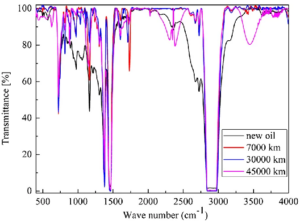
The oil sample sits in the light path between the infrared source and the detector. The detector measures how much light gets through. Then a mathematical process called a Fourier Transform converts that interferogram into a standard infrared spectrum that shows you absorbance plotted against wavenumber. Each peak in that spectrum corresponds to a specific type of chemical bond responding to the infrared radiation. Different functional groups, like carbonyl groups, hydroxyl groups, and aromatic rings, all absorb at their own characteristic wavenumbers.

Types of Detectors Used in FTIR Spectroscopy

The detector inside an FTIR spectrometer is what takes the infrared light signal and converts it into an electrical signal that the instrument can process. FTIR spectrometer detector types genuinely matter when it comes to sensitivity, measurement speed, and what applications the instrument can handle well.
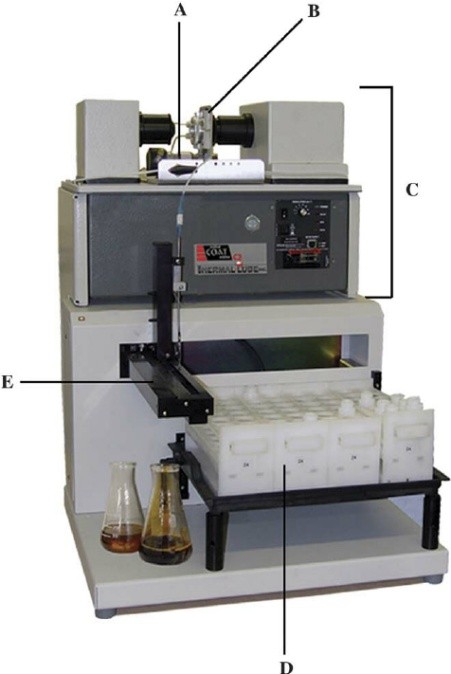
DTGS detectors

DTGS detectors, which stand for Deuterated Triglycine Sulfate, are pyroelectric detectors that work at room temperature. They are by far the most common detector type you will find in routine FTIR analyzers used for oil condition monitoring. DTGS detectors are solid, stable, and need no cooling whatsoever. They give you more than enough sensitivity for transformer oil oxidation monitoring and most other standard oil analysis work. If you are looking to buy FTIR analyzer for oil analysis for a general lab or field setting, a DTGS instrument will handle most of what you need.

MCT detectors

MCT detectors, which stand for Mercury Cadmium Telluride, are semiconductor detectors that need to be cooled with liquid nitrogen or a thermoelectric cooler to work. They offer much higher sensitivity than DTGS, often by a factor of ten or more, and they respond faster too. MCT detectors make sense when you are working with very small samples, trying to detect very low concentrations of specific compounds, or when you need high-speed measurements. For specialized research or particularly sensitive transformer oil analysis work, MCT-equipped instruments are the better choice.

InGaAs detectors

InGaAs detectors, which are made from Indium Gallium Arsenide, are built for the near-infrared range and are common in portable FTIR instruments and process analyzers. They work at room temperature and offer good sensitivity in certain wavelength regions, making them practical for online monitoring applications. Getting a handle on FTIR spectrometer detector types helps you pick the right instrument for your specific situation.
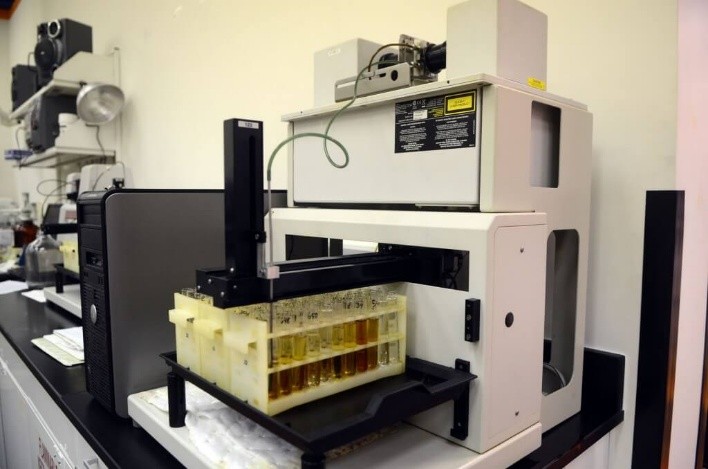
How to Detect Oxidation in Transformer Oil Using FTIR Spectroscopy

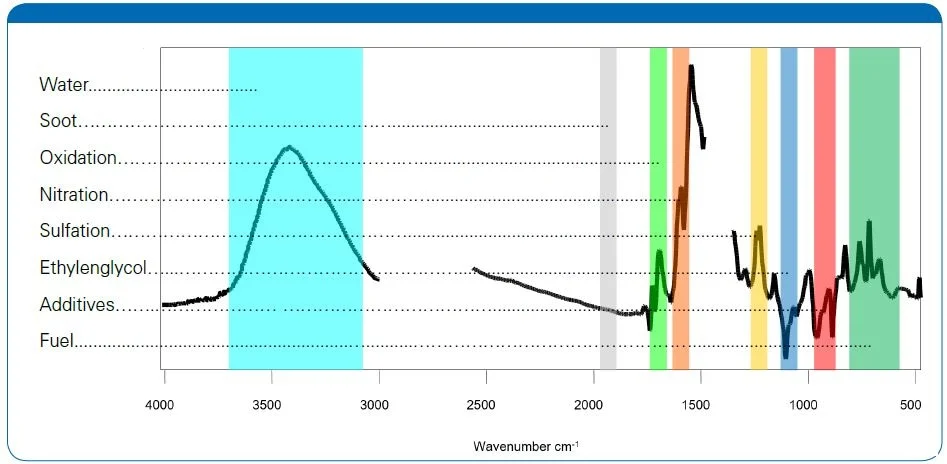
Once you understand the chemistry, figuring out how to detect oxidation in transformer oil using FTIR spectroscopy is actually pretty straightforward. When transformer oil oxidizes, it forms carbonyl compounds, including carboxylic acids, esters, ketones, and aldehydes that were not there, or were there in much smaller amounts, in fresh oil. Carbonyl groups have a carbon-oxygen double bond that absorbs infrared radiation very strongly at around 1700 to 1800 wavenumbers. This part of the spectrum is called the carbonyl region, and it is where analysts spend most of their attention when evaluating transformer oil oxidation by FTIR.

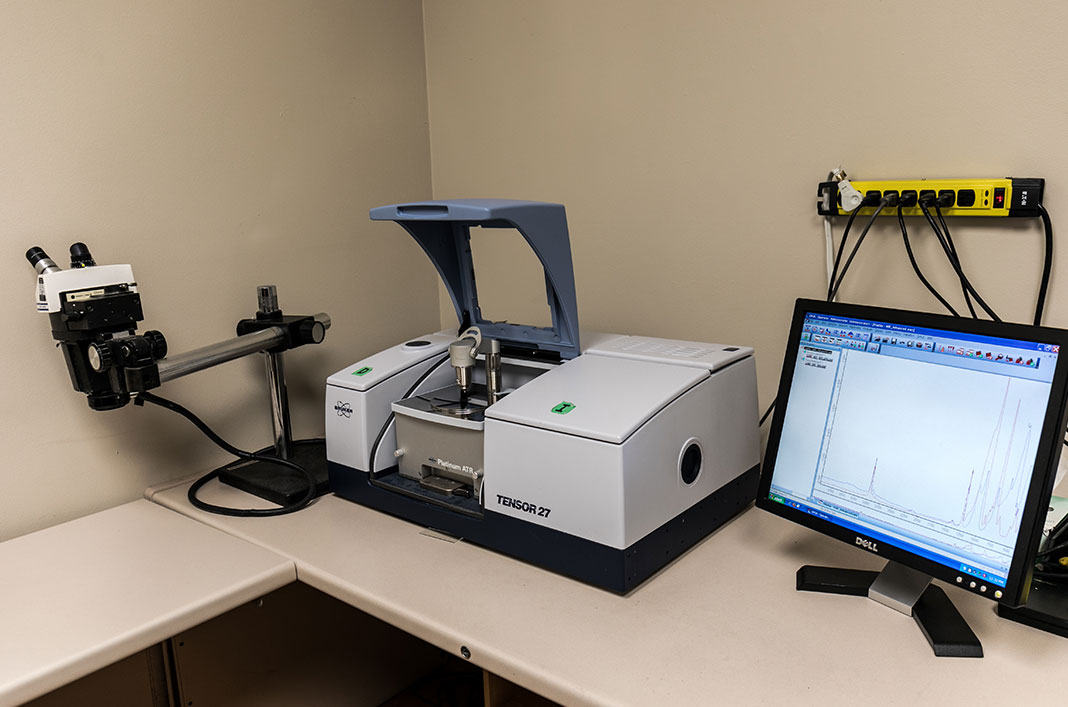
The process works like this. A small amount of transformer oil gets placed on an ATR crystal or prepared as a thin film. The FTIR spectrometer records the infrared spectrum in anywhere from a few seconds to a couple of minutes. That spectrum gets compared to a reference spectrum from fresh oil of the same type, and the differences show what has changed chemically.

The carbonyl index, which is the ratio of the carbonyl peak area to a reference peak from the base oil, is calculated as the main oxidation indicator. Hydroxyl absorption in the 3200 to 3600 wavenumber region adds information about moisture. Drops in absorption at antioxidant wavelengths show how much of the protective additive has been used up. All of this comes out of one single FTIR scan.

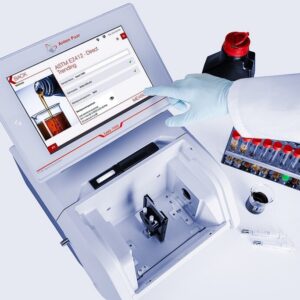
Key Parameters Tracked in Oil Oxidation Monitoring by FTIR

A solid oil oxidation monitoring by the FTIR program covers several parameters from each oil sample, all at once. The carbonyl index is the primary oxidation measure, and a rising carbonyl index across successive tests is the clearest signal that the oil is deteriorating. Antioxidant content measured per ASTM D6971 tells you how much protective additive is left. Moisture or hydroxyl content tracks water that speeds up insulation degradation.

Acid content gives a fast total acid number estimate without separate wet chemistry. Soot and carbon contamination can be picked up in oils that have been through arcing events. Additive depletion beyond just antioxidants, like pour point depressants and corrosion inhibitors, is also captured. And all of this comes from a single scan, which is a huge advantage over running separate tests for each parameter.
Conclusion

FTIR transformer oil analysis has gone from a niche research tool to a practical, everyday method that utilities, industrial plants, and testing labs of all sizes can use. The combination of speed, multi-parameter measurement, minimal sample prep, and solid compliance support makes the FTIR spectroscopy analyzer genuinely one of the most useful instruments in any transformer condition monitoring program. Being able to track transformer oil oxidation reliably through IEC 60666 compliant FTIR transformer oil testing and ASTM D6971 methodology gives asset managers real, actionable data to work with when making decisions about their most valuable equipment.
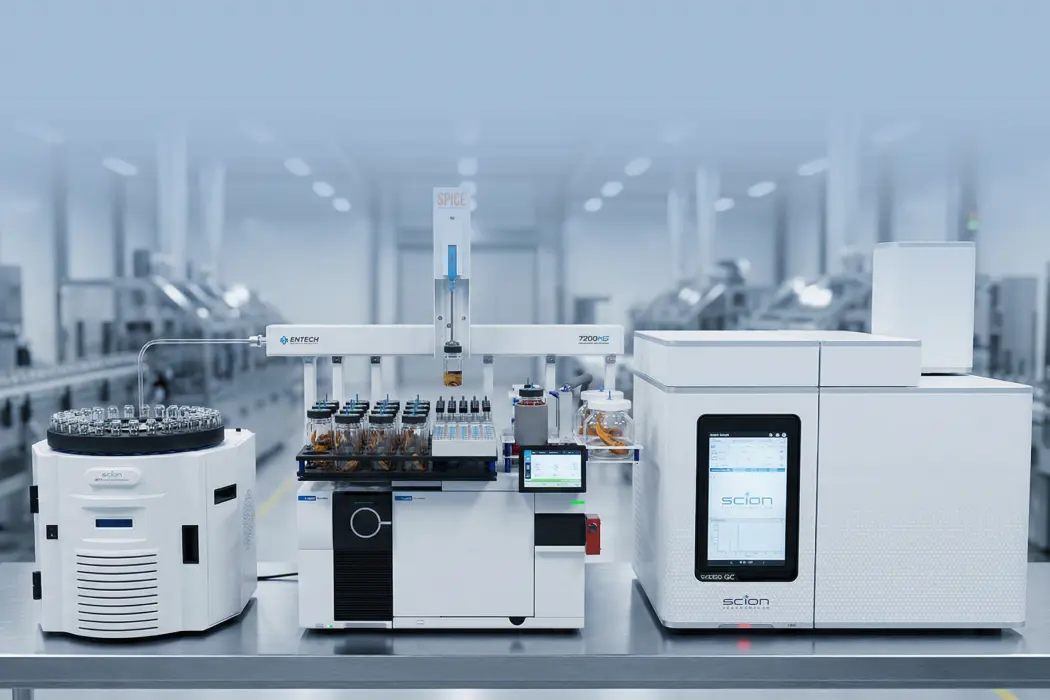

FAQs

What is headspace GC-FID, and how does it work in chemical analysis?

Headspace GC-FID refers to Headspace Gas Chromatography with Flame Ionization Detection. It is an analytical method for measuring volatile organic compounds (VOCs) in samples that are liable to evaporation. The technique analyzes the vapor phase (headspace) above a solid or liquid sample sealed in a vial, rather than directly injecting the sample itself.

The flame ionization detector works by having separated compounds from the GC column enter a hydrogen-air flame, where combustion occurs. This generates ions from the carbon-hydrogen bonds in organic molecules, producing an electrical current proportional to the amount of organic material present.

Headspace GC-FID offers a universal response to organic compounds, exceptional sensitivity, and a wide linear dynamic range, making it ideally suited for quantifying hydrocarbons and volatile organic compounds common in petrochemical operations. It can handle complex hydrocarbon matrices without extensive cleanup procedures, making it valuable for high-throughput quality control laboratories.

Key applications include:

  • Quality control of refined products (fuels, solvents, intermediate products)
  • Process stream monitoring (crude oil fractions, reformate streams, catalytic cracker products)
  • Monocyclic aromatic hydrocarbon (MAH) analysis
  • BTEX compound quantification in gasoline production

Headspace GC-FID serves as a cornerstone for quality assurance programs in petrochemical refineries. The technique excels at analyzing the composition of fuels, solvents, and intermediate products, helping ensure these products meet required specifications.

Yes, for gasoline production, headspace analysis can jointly quantify benzene, toluene, ethylbenzene, and xylene (BTEX) chemicals, which are key elements that influence fuel performance and environmental effects.

Headspace GC-FID analyzes volatile components in process streams, including crude oil fractions, reformate streams, and catalytic cracker products. It delivers reliable results without introducing contamination or requiring extensive sample preparation, making it suitable for continuous process monitoring.

Headspace VOC analysis provides an efficient solution for MAH quantification (such as benzene, toluene, and xylene) in various process streams and finished products. The method’s automation capabilities reduce analysis time compared to traditional extraction-based techniques while maintaining the required accuracy for regulatory compliance.

Headspace GC-FID maintains the accuracy required for regulatory compliance when detecting these compounds, though specific numerical accuracy values are not provided.

Benefits include:

  • Detection of residual solvents down to parts-per-million levels
  • Alignment with regulatory guidelines
  • Ensures products meet safety specifications
  • Critical for pharmaceutical and specialty chemical production

Yes, headspace GC-FID can detect residual solvents down to parts-per-million levels, ensuring products meet safety specifications.

Common solvents analyzed include methanol, acetone, dichloromethane, toluene, and various alcohols and ketones used in chemical synthesis.

The technique aligns with regulatory guidelines, which categorize solvents into three classes based on toxicity and establish permitted daily exposure limits. Headspace GC-FID’s ability to detect solvents at parts-per-million levels ensures pharmaceutical products meet these safety specifications.

The FID’s universal response to organic compounds, combined with exceptional sensitivity and wide linear dynamic range, makes it ideally suited for quantifying hydrocarbons and other volatile organic compounds.

Headspace GC-FID excels at detecting and quantifying volatile organic impurities across diverse product types, including polymers, resins, adhesives, and specialty chemicals. The method’s high sensitivity enables detection of trace-level contaminants that could impact downstream processing or end-use applications.

Yes, headspace GC-FID can detect and quantify volatile impurities in polymers and resins, among other product types.

Research shows that multiple headspace extraction coupled with GC-FID analysis provides a solvent-free method for quantifying volatile contaminants in heat transfer fluids and hot oils, including benzene, toluene, and degradation products that accumulate over time.

Yes, headspace GC-FID provides an efficient solution for monitoring compliance with VOC emission regulations. The technique can analyze air samples, process vents, and fugitive emissions to quantify volatile organic compounds and ensure operations remain within permitted limits.

Headspace GC-FID analysis enables accurate quantification of dissolved volatile organic compounds in wastewater streams to verify treatment effectiveness and ensure discharge compliance. It can also monitor biodegradation processes by detecting methane and other metabolic products, providing insights into treatment efficiency.

Key parameters include equilibration temperature and equilibration time. The partition coefficient (ratio of analyte concentration in headspace to sample matrix) is greatly affected by equilibration temperature. Equilibration time must be sufficient to establish phase equilibrium; some volatile compounds reach equilibrium within minutes, while others may require 30-90 minutes depending on their physical properties and sample matrix.

Higher temperatures generally increase vapor-phase concentrations, improving sensitivity, but may also introduce matrix effects or cause sample degradation.

Multiple headspace extraction techniques can overcome equilibration limitations for particularly challenging applications.

Common vial sizes range from 10 to 22 ml, with larger volumes accommodating bigger samples or providing more headspace for analysis.

Septum selection is equally important to vial selection. High-quality septa must withstand repeated needle penetrations without introducing contamination or allowing sample leakage. Temperature-resistant septa are essential for methods using elevated equilibration temperatures.

Yes, while helium has traditionally been the carrier gas of choice, hydrogen is increasingly adopted due to helium supply constraints. Method translation software can facilitate switching between carrier gases while maintaining separation quality.

Headspace GC-FID systems integrate readily with Laboratory Information Management Systems (LIMS), enabling automated data transfer, electronic signatures, and audit trail documentation required for cGMP compliance. Automated reporting capabilities reduce transcription errors and accelerate the delivery of analytical results.

The total cost of ownership encompasses more than the initial capital investment and includes favorable operational economics through:

Reduced solvent consumption, eliminating costs for extraction solvents and waste disposal

  • Minimal sample preparation reduces labor requirements
  • An extended instrument lifetime lowers maintenance and replacement costs
  • High sample throughput maximizes laboratory productivity
  • Reduced column fouling, decreasing consumable costs

Specific numerical costs are not provided.

Automation enables laboratories to operate continuously, maximizing instrument utilization and reducing labor costs. Automated headspace samplers can process samples unattended, and for high-volume quality control laboratories, automation capabilities often justify the investment within months.

Automated headspace samplers can process 40-120 samples unattended, depending on the system configuration and analytical method.

The petrochemical and chemical manufacturing industries benefit most, including:

  • Petrochemical refineries
  • Chemical manufacturing (pharmaceutical and specialty chemical production)
  • Facilities requiring environmental compliance monitoring

For high-volume quality control laboratories, automation capabilities often justify the investment in headspace technology within months.

What is FTIR analysis in transformer oil?
FTIR analysis in transformer oil uses infrared light to detect and measure different chemical compounds in the oil. It helps identify oxidation products, antioxidant levels, moisture, and other condition indicators in a single scan, making it a fast and reliable method for monitoring transformer oil condition.
Transformer oil oxidation testing matters because oxidized oil forms acids and sludge that damage insulation and restrict cooling. If you leave it unchecked, it accelerates aging and raises the risk of transformer failure.
FTIR spectroscopy oil analysis works by shining infrared light onto or through an oil sample and recording which wavelengths get absorbed. The result is an infrared spectrum where each peak tells something about the chemical composition of the oil. You can identify what compounds are present and how much of each one exists from a single measurement.
IEC 60666 compliant FTIR transformer oil testing ensures your analysis procedures, calibration, and reporting meet internationally recognized requirements. Following IEC 60666 means your oil analysis data will be accepted and trusted across international markets.
ASTM D6971 is the American standard that specifies the FTIR method for measuring hindered phenolic antioxidants in electrical insulating oils. ASTM D6971 is closely tied to oil oxidation monitoring by FTIR. It provides the calibration procedures and measurement protocols needed to quantify antioxidant compounds like DBPC and DBP accurately.
To detect oxidation in transformer oil using FTIR spectroscopy, you place a small oil sample on the ATR crystal and record the infrared spectrum. You then compare that spectrum to a fresh reference oil spectrum. Growth in the carbonyl absorption region around 1700 to 1800 wavenumbers shows that oxidation products have formed. The carbonyl index calculated from this region gives you the main quantitative oxidation measure.
The three main FTIR spectrometer detector types used in oil analysis are DTGS, MCT, and InGaAs detectors.
A DTGS detector is a room-temperature pyroelectric detector that is the standard choice in most benchtop FTIR spectroscopy analyzers for oil condition monitoring. Yes, it is good, needs no cooling, and is the most cost-effective option for most oil analysis labs.
An MCT detector makes sense when your work requires detecting very low concentrations of specific compounds, working with very small sample volumes, or performing high-speed measurements that a DTGS detector cannot handle.
In a single FTIR scan, you can simultaneously measure the carbonyl index for direct oxidation indication, antioxidant content per ASTM D6971, moisture content, a total acid number estimate, contamination indicators, and additive depletion levels. FTIR spectroscopy oil analysis has replaced so many traditional single-parameter test methods
A complete FTIR transformer oil analysis from placing the sample to getting results takes just a few minutes. The actual scan runs anywhere from 30 seconds to 2 minutes, depending on how many scans are averaged. Result calculation can be fully automated.
The carbonyl index is the main quantitative oxidation marker in FTIR transformer oil analysis. It is calculated from the carbonyl absorption peak area in the spectrum, typically around 1700 to 1800 wavenumbers, normalized against a reference peak from the base oil
Yes, FTIR spectroscopy oil analysis detects moisture through the hydroxyl absorption band in the 3200 to 3600 wavenumber region.
Basically, no, we do not need to prepare the sample before FTIR transformer oil analysis. It makes FTIR spectroscopy oil analysis so practical for routine lab and field use.
The infrared beam enters a crystal and reflects internally at the surface where the sample is placed. Diamond ATR crystals are extremely durable and chemically resistant, which makes them the go-to choice for routine transformer oil oxidation testing because they hold up to heavy use without degrading.
For most power transformers, once a year is a typical starting point for FTIR transformer oil analysis. If previous results show a rising carbonyl index or noticeably depleted antioxidant levels, bumping up to every three to six months makes sense.
ASTM D6971 measures hindered phenolic antioxidants (like DBPC) in transformer oil using FTIR spectroscopy. Monitoring their depletion helps determine how much oxidation protection the oil still has before degradation begins.For most power transformers, once a year is a typical starting point for FTIR transformer oil analysis. If previous results show a rising carbonyl index or noticeably depleted antioxidant levels, bumping up to every three to six months makes sense.
Not entirely. FTIR spectroscopy oil analysis is a really powerful screening and trending tool, but it works best alongside traditional wet chemistry tests rather than as a complete replacement.
You can buy FTIR analyzer for oil analysis from major analytical instrument manufacturers and their regional distributors. Make sure the vendor offers application-specific training for oil analysis and has reliable local service support.
Benchtop FTIR spectroscopy analyzers deliver better optical performance, support a wider range of sampling accessories, and give you more flexibility for method development. Portable FTIR analyzers are compact and battery-powered, built for field use right at the transformer location.
FTIR transformer oil analysis helps track condition trends for individual transformers and identify unusual results across a fleet. It supports maintenance decisions, estimates oil service life, and provides documented records for regulatory or insurance needs.
Antioxidants protect transformer oil from oxidation and slow the degradation process. FTIR monitoring, based on ASTM D6971, tracks antioxidant levels so maintenance can be planned before the oil deteriorates quickly.
Yes, FTIR spectroscopy oil analysis can pick up certain types of contamination.
Key software features include validated calibration models for carbonyl index, antioxidant content (ASTM D6971), and moisture estimation, along with automated spectral comparison with reference oil. It also supports result trending for transformers, alarm alerts for abnormal values, IEC 60666 compliant reports, and integration with laboratory data systems.
The FTIR method validation includes confirming calibration linearity, precision through repeated tests, and accuracy using reference materials. It also determines detection limits and documents results in a validation report for the specific oil types and concentration ranges used in testing.
IEC 60666 compliant FTIR testing requires calibration using certified reference standards and calibration curves across multiple concentration levels. It also needs regular verification with control samples and fully documented, traceable calibration procedures
FTIR transformer oil analysis can be used for both mineral insulating oils and synthetic or natural ester transformer fluids. However, each oil type requires its own reference spectrum and calibration model, especially for ester oils, where specialized models are needed due to overlapping carbonyl absorption.
Oil temperature can influence FTIR measurements, especially when viscous oil does not spread well on the ATR crystal. Testing at room temperature or gently warming the sample to about 40°C helps ensure good contact and consistent results.
FTIR oil analysis is useful but has some limits. It cannot measure dissolved gases or metals or give highly precise moisture values, which require methods like DGA, ICP, or Karl Fischer titration. FTIR results also depend on strong calibration models, so it works best when used alongside other oil testing methods in a monitoring program.


Leave a Comment

Related Posts